

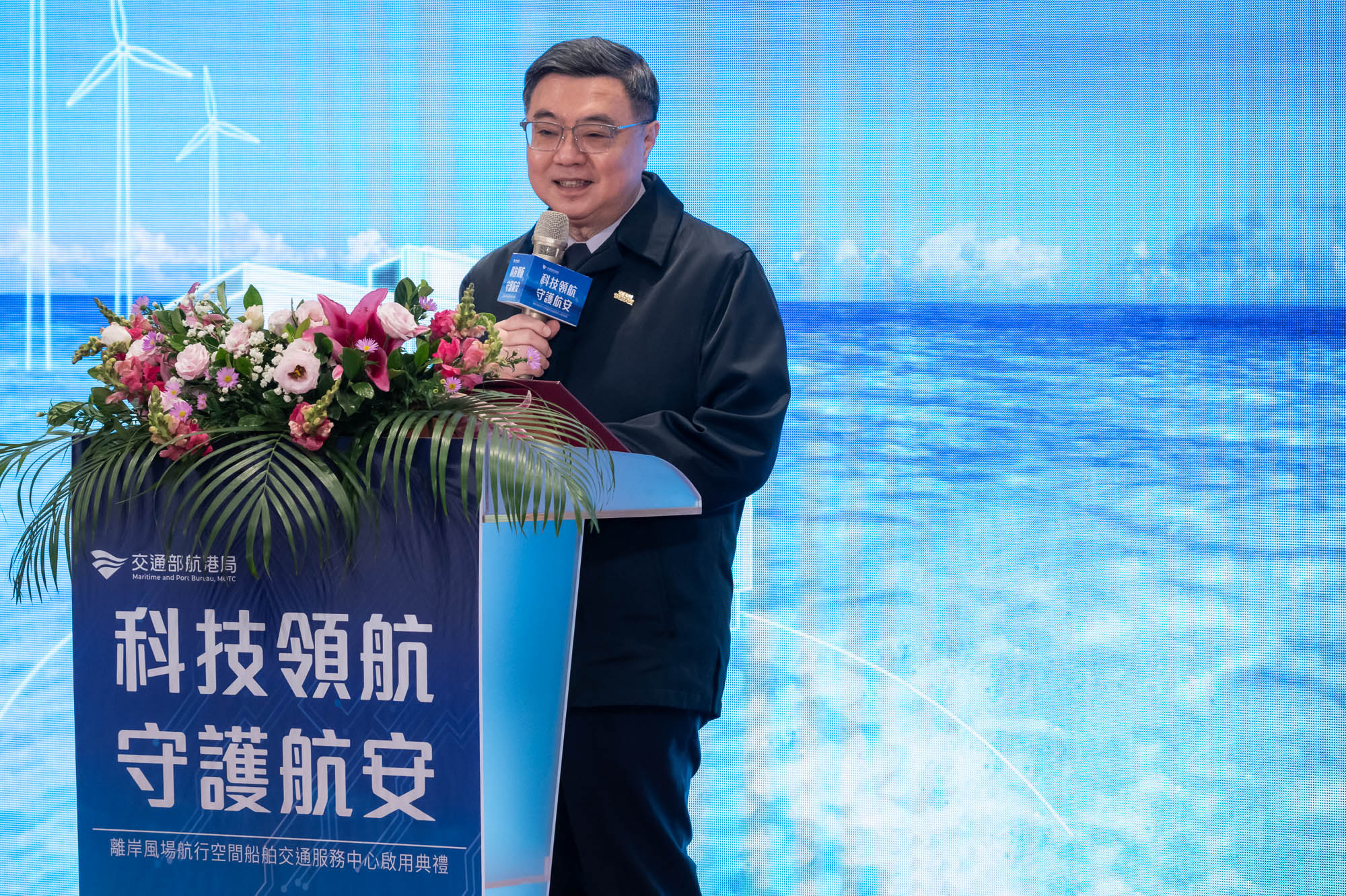
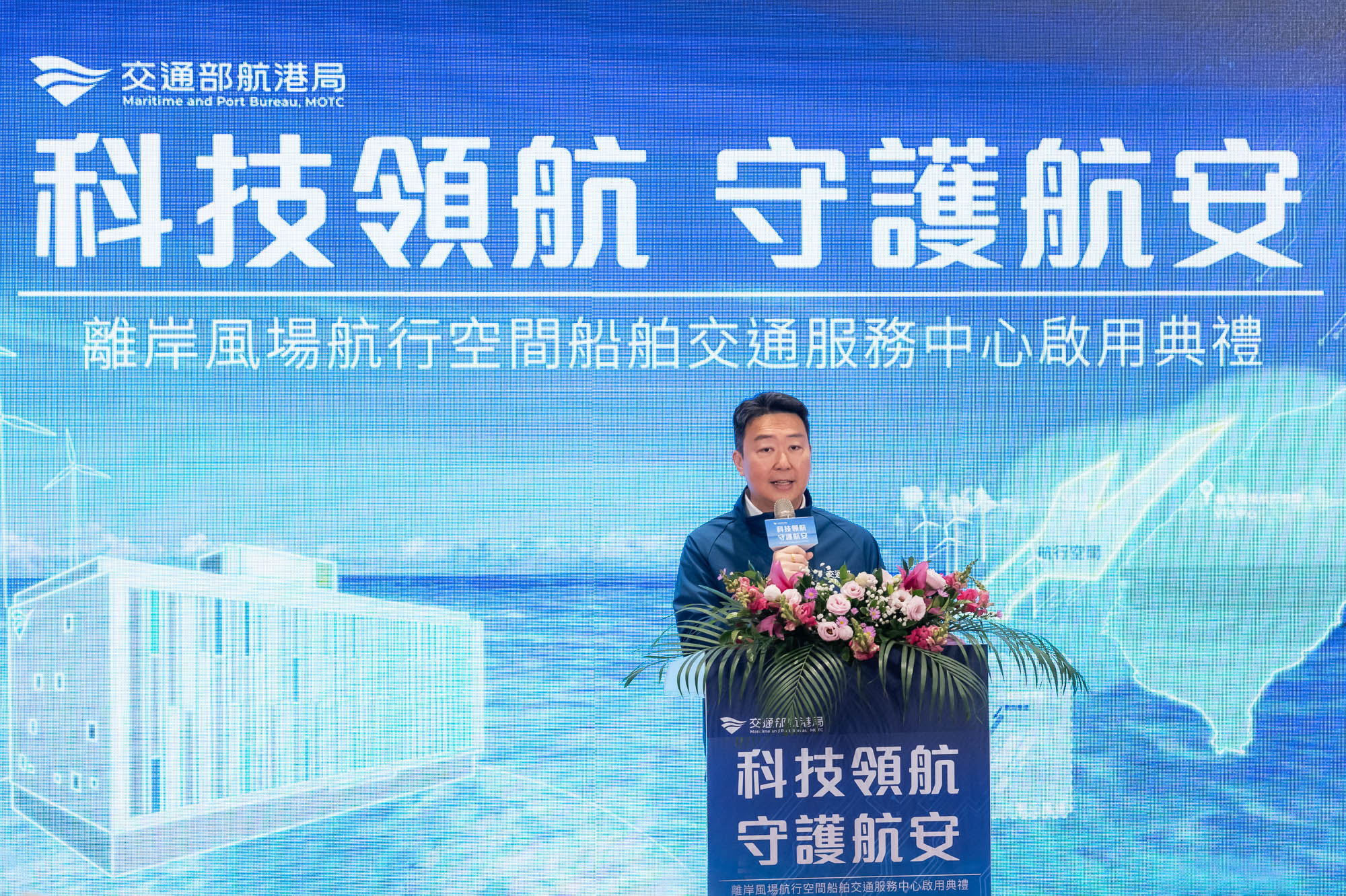
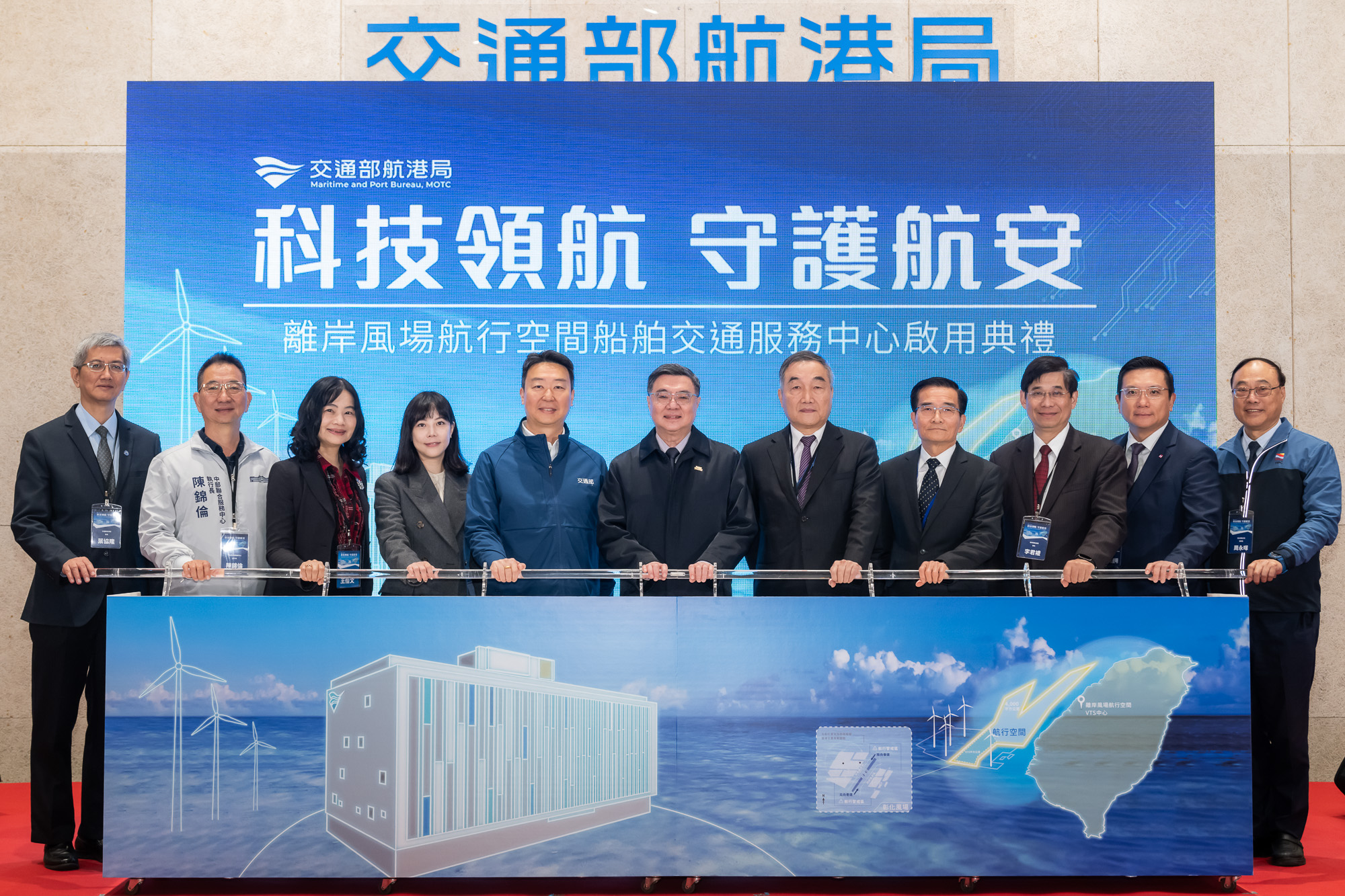
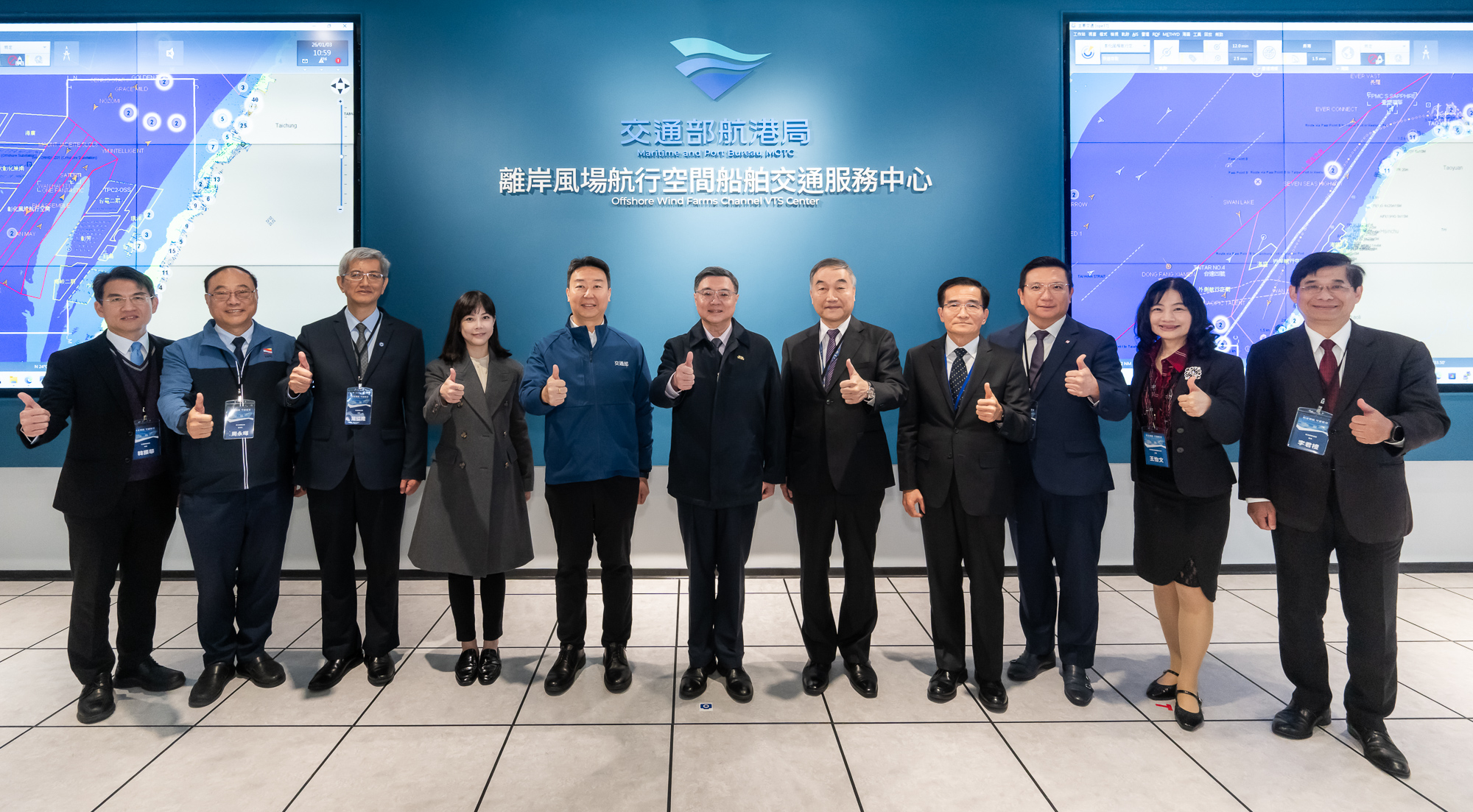
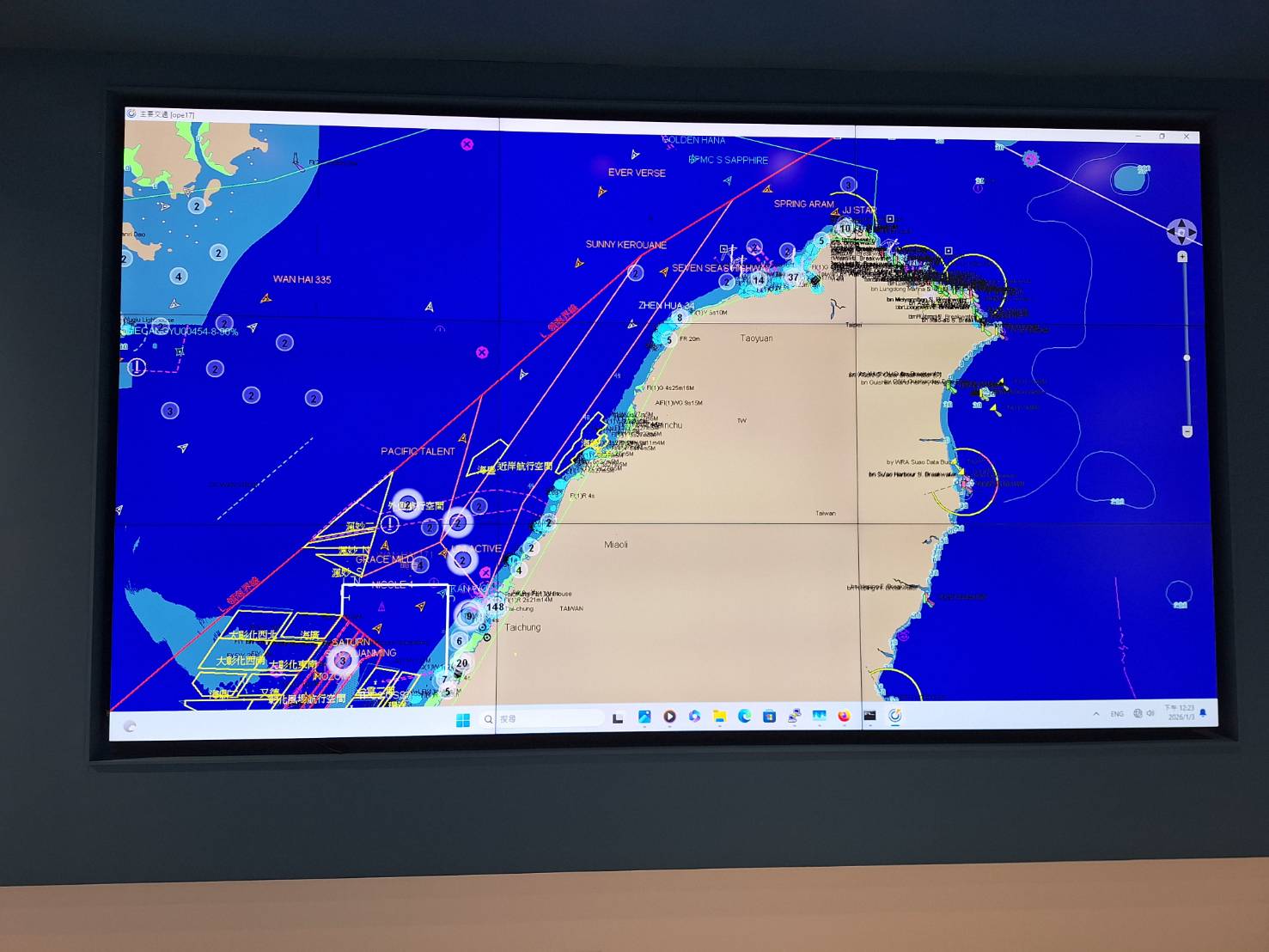
In response to the promotion of national green energy policies and the rapid development of the offshore wind power industry, the Maritime and Port Bureau (MPB) of the Ministry of Transportation and Communications (MOTC) has established an "Offshore Wind Farm Vessel Traffic Service (VTS) center" at the Port of Taichung. The center was officially inaugurated this morning (January 3). Premier Cho Jung-tai of the Executive Yuan presided over the ceremony, accompanied by Minister of MOTC Chen Shih-kai, Executive Yuan Spokesperson Lee Hui-chih, Central Taiwan Joint Services Center Executive Director Chen Chin-lun, Taichung City Deputy Mayor Huang Kuo-jung, Ocean Affairs Council Administrative Deputy Minister Chang Chung-lung, Ocean Conservation Administration Director-General Lu Shiau-yun, Energy Administration Director-General Lee Chun-li, Taiwan International Ports Corporation (TIPC) Chairman Chou Yung-hui, Department of Navigation and Aviation Director Han Chen-hua, and MPB Director-General Yeh Hsieh-lung. Premier Cho delivered remarks and inspected the newly established center. National Association of Chinese Shipowners Chairman Tsai Feng-ming, along with senior executives from the shipping and offshore wind power industries, were also present to witness this profound milestone in Taiwan’s energy transition, smart governance, and navigational safety journey.
In his remarks, Premier Cho noted that offshore wind power development is a key policy direction in Taiwan’s efforts to achieving net-zero emissions by 2050 and that the shipping industry, which carries more than 90% of Taiwan’s international trade cargo, is likewise a crucial part of the nation’s economic development. Therefore, both energy development and the shipping industry must be jointly protected by the government. He further explained that the Executive Yuan, as stated in its 2025 “10 New AI Infrastructure Initiatives” announcement, aims to enable all industries to leverage smart applications to accelerate collaborative development among various sectors working on AI technologies. Today’s official launch of the offshore VTS center, which uses technology to ensure navigational safety, not only aligns with the Executive Yuan’s policy direction and commitment to digital governance and building a smart nation but also provides greater confidence and peace of mind for offshore wind power developers and shipping operators, allowing them to focus on industrial development without policy concerns. Premier Cho also emphasized that the central government will continue to work closely with local governments to advance established policies, while urging all ministries and councils to further integrate innovative technologies such as AI into public services. These efforts will strengthen the nation’s overall security and resilience, protect the lives and property of the people, and steadily drive Taiwan’s sustainable energy development.
Minister Chen stated that Taiwan is the world’s fifth-largest offshore wind power development country. In addition to continuing to advance national green energy policies, vessel navigational safety must also be strengthened through enhanced management to ensure the sustainable development of both green energy and shipping. Accordingly, in its capacity as the national authority for maritime affairs, the MOTC has thoroughly reviewed the future development of Taiwan’s maritime transport and ports, and has directed the MPB to adopt a forward-looking approach and undertake proactive planning. Upholding the core principle of “leveraging innovative technologies to intelligently safeguard navigational safety,” the MOTC has constructed the brand-new offshore VTS center, comprehensively upgrading the vessel traffic service system. Minister Chen emphasized that the VTS system has been optimized and upgraded across three key dimensions: broader monitoring coverage, better system resilience, and stronger public–private collaboration. The monitoring area has been substantially expanded from 673 square kilometers to 4,000 square kilometers, representing a sixfold coverage increase. The monitored waters now extend northward from Changhua to New Taipei City. In addition, the system is designed with dual servers, dual networks, and uninterruptible power supplies to ensure continuous monitoring services. Public–private collaboration is also a major innovation of the new VTS system. Through integration with offshore wind farm automatic identification system and radar systems, the MPB has effectively eliminated monitoring blind spots, enabling both public and private sectors to jointly safeguard wind farms and vessel navigation safety. This ensures that while Taiwan continues to develop its offshore wind power, vessels can still navigate safely and in an orderly manner. Such an achievement not only represents a crucial outcome of MOTC’s efforts in ensuring both energy policy implementation and navigational safety management in offshore wind farm waters but also demonstrates Taiwan’s commitment to promoting green energy policies.
The inauguration of the offshore VTS center marks a new stage in the advancement of Taiwan’s smart navigational safety. Looking ahead, as offshore wind power continues to expand, the MOTC is fully prepared to move forward. In addition to maintaining a navigational safety management system that remains seamlessly aligned with international standards, the MOTC will actively introduce innovative technologies such as AI and equip MPB frontline personnel with the most advanced tools to maintain navigation safety and ensure safe, smooth voyages, thereby achieving the goal of “protecting navigational safety through technology.”
Contact person: Section Chief Tseng Yi-che, Central Maritime Affairs Center, MPB, MOTC
Tel.: 04-23690709

 LINE ID: @737qilqg Service Hours: 9:00 am - 06:00 pm on work day